Recently I was scanning around my Alexa playlist for music by Ennio Morricone, the same person who created the music for "The Good, The Bad and The Ugly". I chanced upon this magnificent track from an Italian movie "Malena", featuring an equally beautiful Monica Bellucci.
It's about the childhood crush of a young boy on a much older lady. And like most crushes, this one is about the kid's short term tribulations associated with it.
I''m sure every one of us had similar crushes in our school days, and maybe a bit later too. At that point in time, it would be the most serious thing that happened to us, but within days or weeks, all that is forgotten and life's back to normal. Much of what happened in those years was like that.
But is that the case when we grow up?
I was going back to my own posts from more than ten years back. Back then it used to be travelogues, movie reviews, photography, long drives and so on.
But my last few posts have been on not so fun topics, which makes me ask this question, "Why so serious?"
I guess everyone goes through phases of life when different things take priority. I just wonder, how things will turn out ten years from here on.
To be honest, I didn't have anything of purpose to post lately. But then, I remembered a story that goes somewhat like this.
By Hindu mythology, it is believed that the rains are caused by Lord Shiva's beating of his special drums. And for some reason, He got angry with the people on the earth that He decided that there would be no rains for a long time. The people, who came to know went to Goddess Parvati asking for help, who understood that something had to be done so that the people don't suffer. She told a nice story to convince the Lord that one needed to constantly practice what they do, in order that they don't forget doing it altogether. And just to be in practice, the Lord plays his drums and in the process brings rains.
I didn't have anything much to write, which makes this a pointless post actually.
But did it just to keep in touch and not forget writing altogether. And now that you've reached this far, take some time away to "Return To Innocence"
I've been caught up with a lot of things lately, which didn't give me enough time post for a while now.
I was also on my annual pilgrimage vacation encompassing temple runs through coastal Karavali and Malnad regions. A 1000 kilometre drive is good for the car, and for me as well.
I must admit, the best time for photography at my grandma's house somewhere in the deep forests of Chickmagalur district is either on a rainy day, or on a really foggy and cold winter morning.
Nevertheless, there were still enough flowers to get the photographer excited in me.
Around this time, I heard of the massacre of Indian soldiers in Kashmir. As I was contemplating what our response should be, two statements made by the same person came into my mind.
"Victory attained by violence is tantamount to defeat, for it is momentary".
"If there is violence in our hearts, then it's better to be violent, than to cover impotence in the cloak of non violence."
I could see a lot of Facebook posts, Whatsapp posts around this for the past week or so. I am sure that the powers that may be are planning a befitting reply to all this.
I would certainly like to see an Operation Wrath of God kind of onslaught against the perpetrators of this attack. This was how the Israeli intelligence, under the leadership of Golda Meir and Moshe Dayan, responded to the 1972 killing of 11 Israeli athletes at the Munich Olympics.
They did kill, but in ways which created an eternal fear in their enemy.
As a country, we are far more diverse than any other country in the world - language, food, ethnicity, religion, traditions and so on. The British used all this, and the caste system to further divide us. And they also ensured that regions friendly to them benefited at the cost of others around them.
And over the last 70 years or so, the politicians have also exploited this to suit their need, or greed.
From my childhood days, I can think of Cauvery water and Belgaum disputes as two strong examples of this in Karnataka itself. They were created by the British, and nurtured by our politicians - I feel that they have manipulated the emotions in such a way that we spew hatred and venom on our own countrymen, while a practical and amicable solution is always a possibility.
Its always easy to put the blame on our politicians, but is there something that we could do on a day to day basis, at work?
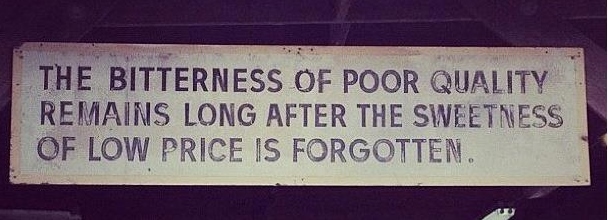
I am talking primarily from an IT professional's perspective, but could be applicable for anyone else as well. Whenever we work with a new client, or new partner - there is immense amount of skepticism, pessimism on whether the teams from India can deliver. Right from day one, its a matter of playing catch up.
And when we investigate deeper, on why its like this, the answer is clear. Almost everyone who has worked in the past, has had a poor experience working with India.
Poor quality, lack of skills, commitment, communication, etc could be root cause - at any level, from a developer to the CEO. In one of our team dinner discussions, we guesstimated that at most 40% of the projects we take up across Indian IT is actually successful - and we were being quite generous.
I can recollect being part of a test fest at Bled, Slovenia for one our products in the late part of 2007. Though we represented a highly respected multinational company, we were always identified as Indians, and never as professionals from our company, and almost always in a condescending manner.
Every time we do a bad job at our work, the damage caused is beyond the team, the unit, the department or the company. Knowingly or unknowingly we sully our own country's name.
The real soldiers may be securing our borders, but we have to do our bit as well.
I'd like to wish readers of my blog posts a very Happy and Prosperous New Year 2019. Maybe a lot of you have made a lot of new year's resolutions, good luck with that.
I'm not much of a fan of new year resolutions. I try to bring in new changes on a weekly basis.
Agile vs waterfall if you may call it.
There's one thing I've been trying to change almost every Monday now, but struggling with it. I want to stop making the three hundred metre dash from home to the stop where my office cab picks me up. I somehow end up being late, by a minute or two - forcing me to run, thrice a week almost regularly.
There have been times when my colleague in the cab has made it amply clear that I need to be more on time. Though not the best way to start the day, I'm still OK with it.
One, I need to respect her punctuality - 6:11 AM, nine days out of ten.
And two, these two minutes help me earn close to two hours of more productive time at work.
Baffled? Let me explain.
If I reach by office cab, I am at my desk 7:20 in worst case. A quick email check, equally quick breakfast and I'm good to start my day's work by 8:00. And since my first planned meeting is not before 9:30, I get uninterrupted time alone to accomplish a lot that I've planned for the day.
On the other hand, the two days a week that I take my car, I tend to be a bit slower off the blocks. Which means that I reach office by only around 8:00 and then rush off for breakfast immediately. Which means that I can start work by 8:45 at the earliest.
Since time is the most important non renewable resource we have, I thought why not spend some time writing about it.
Maybe share some tips that I picked up over the years.
One needs to be very efficient with time, be it at work or elsewhere. Planning, discipline and prioritization are really important for this.
A known technique for better time management is the Pomodoro technique - I've personally used my adaption of this for the best part of fifteen years now.
First up in the morning, create a to-do list for the day. Keep a target end time at which you plan to end your work. Remove the non productive time - meetings, org activities, lunch, breaks, etc.
Now, breakup the total available time into equal parts, called as a Pomodoro. You may start with 25 minutes each, while I prefer 40 minutes for myself.
During this time pickup one item after the other from your to-do list, focus on it completely - no mails, no mobile phones, no self initiated talks with colleagues and so on. Working in silence, be it at office, or in the kitchen is a sign of control.
If you need to let your colleagues know that you shouldn't be disturbed during this time, you may even consider getting flags from Barbecue Nation.
If your work involves sending a lot of emails, then you may consider having a dedicated Pomodoro for that as well.
After each Pomodoro keep a 5 minutes break - where you may respond quickly to emails.
And after four successive Pomodoros, take a longer break, say 15 minutes. Likewise, plan for a longer 30-45 minute break coinciding with your lunch break.
Please note two things here.
One, Pomodoro translates to a Tomato, which means that you are bound to get a few rotten ones - unplanned meetings, short but needed discussions and so on. So don't plan for all of the available time in the day. After a few trial and errors, you'll be a better judge of how many good tomatoes you can do in a day.
Two, if you are a developer or into testing, you may say that planning may not be straightforward. You may not have a well defined to-do list, a lot of what you do may be R & D, you didn't get the build in time and so on. Nevertheless, it's still important that you plan your work adequately well and in a very structured manner. You'll get it right with experience, and it's important that you get the first button on the shirt right.
Try practicing a similar technique for a month or two, and check if you are able to manage time better and if your overall productivity is higher.
While this was about how to manage time better, the next part is about how to avoid time killers.
A few weeks back when I was reviewing the sprint outcome of one of my teams, I found that the team had spent a whopping 25% of the total available time(at 8 hours a day) on meetings. What was even more disturbing was that most of these meetings were unstructured(without an agenda) or without preparation, or both.
When you initiate a meeting, its good to have an agenda, and then discuss only those points which are there on the agenda. When invited for one, please request the organizer for an agenda.
A word of caution here, since most of us are operating in a hierarchical Indian environment, use some discretion with this.
I can recollect an instance a few months back with a senior manager in our department, where I sent out the meeting invitation with an agenda. The response was "Oh, you are very being professional, meetings with an agenda!". Nevertheless, since we stuck to the agenda, the meeting that was planned for 30 minutes, got over in 9 minutes flat!
Two days back, one of the leads in our team said that people take tea breaks of the duration of a lunch break. This is a particularly irritating habit, I'm sure across all teams, in almost all companies across India. While breaks may be necessary, the duration and frequency is what needs to be in control. Self restraint, discipline and knowing one's priorities is very important here.
And since we are talking about time here, a lot of it is applicable to our daily lives outside of work as well. In our school days, I'm sure we were taught that recreation is necessary.
In today's day and age, if one is spending more than 45 minutes a day on recreation of whatever kind - TV, internet, social media, reading novels, playing games on the mobile - they are doing a big disservice to themselves and just wasting time.
I remember that my father was very strict with time. In the summer vacations he was OK with me playing cricket in the hot sun, but never approved of me reading Hardy Boys at home. I didn't understand why when I was a kid, but now I do.
The body also needs adequate rest in the form of sleep, but we need to know to draw the line between taking rest and being lazy.
Hours of wasted time add up to days in a few months, days to months and months to years. One can earn lost money, but never lost time.
On a more philosophical note, one needs to challenge time all the time. No matter how hard we try, Time always Wins!
Just wanted to end this post with a very profound song on Time by Pink Floyd. Its so good that I was compelled to copy paste the lyrics. If you understand this, you know what time is all about.
"Ticking away the moments that make up a dull day
Fritter and waste the hours in an offhand way.
Kicking around on a piece of ground in your home town
Waiting for someone or something to show you the way.
Tired of lying in the sunshine staying home to watch the rain.
You are young and life is long and there is time to kill today.
And then one day you find ten years have got behind you.
No one told you when to run, you missed the starting gun.
So you run and you run to catch up with the sun but it's sinking
Racing around to come up behind you again.
The sun is the same in a relative way but you're older,
Shorter of breath and one day closer to death.
Every year is getting shorter never seem to find the time.
Plans that either come to naught or half a page of scribbled lines
Hanging on in quiet desperation is the English way
When you read the heading of this post, what was the first thing that came to your mind? A Pink Elephant? Off late, this has been the question that I ask many of my teammates. And I ask this everytime someone comes up to me and says, "I don't think we are in a bad position for this sprint." "I don't think I have a problem with my manager." "I don't think we'll be able to complete this task within this time, given the experience we had last week." Research has proven that the human brain has a big issue dealing with negatives. In my experience it's more so when the sentence itself begins with negatives. Someone came to me to get an email reviewed, which read like this, "We cannot support this feature by date X as the UI concept is not available." I got it rephrased to, "We shall be able to support this feature by date X if we get the UI concept by date Y." This way we communicated a positive intent to support, and subtly put the onus on resolving dependencies to the other side as well. There are a handful of people who are eternally optimistic. When one interacts with them, one feels everything looks so "Bade araam se". I'm lucky to have a few of them in my team as well. Being like that comes naturally to them. But for normal people like me, it needs constant conditioning of the mind. A lot of our attitude shows up in the way we talk, our day to day outlook and the overall body language, without our knowledge. Almost every time that I have started something on a pessimistic note, I have failed. Almost every interview that I have attended in the past in which I have uttered the words, "I don't know" (or similar) when faced with a difficult question, the interview has ended shortly after that. Many years back, a manager of mine wrote these exact words in his annual appraisal comments about me, "Santosh needs to work with a more Can Do Attitude". Given that we didn't exactly share the best of professional relationships, I could have easily ticked it off as an attempt to vilify me, since it was documented and could be used against me in the appraisal discussion. Nevertheless, I sat down to understand if this was true and how to address it. And it turned out that I had a fair deal of change to be done in my attitude and communication. More on what I did, in some other post perhaps. To keep it short, everyone likes people who believe "The Word is my World" rather than "The World is my Word". Around this time, I also attended a training program where the trainer told us this story about a seasoned mountaineer who had climbed all the major peaks in the Himalayas. He spoke about the difference between the amateurs and the seasoned ones when they have to tackle a tough section of the mountain in front of them. While the amateurs try to find all ways around it or maybe even bypass it, the veterans always find a way through it. His point was, "If I am here to conquer a mountain 6000 or more metres high, then I must not be deterred by this small section of mountain in front of me".
This was the most important learning point for me from that training program.
We must be like the seasoned professional in our outlook towards everything.
At work, everyday we are faced with all kinds of challenges and obstacles. Its up to us to decide if we want to procrastinate, circumvent, find an excuse or take these challenges head on. When I mean head on, I don't necessarily mean to be fast and furious in action.
Of course, doubts, apprehensions, will always be there.
Its important to take note of them and find ways to solve them, rather than not taking up the challenge itself. We also need to reassure ourselves that "Aal iz well".
While we may not be successful at all times, it will help us grow stronger and be better prepared the next time around.
A very profound quote from Sadhguru Jaggi Vasudev.
There were a few other topics that I wanted to write about, but since I returned from a short business trip, I thought I'll write about it first while its still fresh in memory.
I got an opportunity to travel to Germany for the workshop of a new project, and I had quite a few of my colleagues with me. Most of them stayed in the same hotel as mine, in a quiet countryside hotel in a place just outside of Stuttgart.
The view from my room was something like this.
We went to Stuttgart city twice during my stay. It vividly reminded me of the Need For Speed Porsche Unlimited game that I was addicted to during my engineering days. Many of the places, the U-Bahn lines in the middle of the roads, the old style Hauptbahnhof looked all so familiar from that game.
Over the weekend, we got a chance for two short day trips. One to Schwarzwald(Black Forest) and the other to Interlaken in Switzerland.
Here's Triberg waterfalls in Schwarzwald, home to one of the oldest hydroelectric projects in the world.
Interlaken was just around three and a half hours' drive from the place where we stayed. It was a place full of vast lakes, giving a picturesque view of the Alps behind them.
This was also the place where Yash Chopra shot a lot of the scenes in DDLJ. In honour of that, the local authorities put up a statue of him, calling him the Ambassador of Interlaken.
This was my fourth trip outside of India in the one year after joining Mercedes Benz, two of them being to the US and two to Germany.
Somehow I liked Germany, and Europe a lot more than even the sunshine state of California, despite the weather. This is my kind of place, in a quaint setting with an old world charm about it.
This explains why I have a second post on Europe, the first one being more than a decade back.
A family friend of ours, who's settled in the US and comes to India once a year always says, "America is man made, Europe is God made".
There were some things that I liked about Germany in particular.
Public transport system
You can buy one ticket and use them in any of the buses or train lines, as long as you know how far that ticket can take you. There are no turnstiles in train stations, nor conductors in buses. They believe in the honour system, based on trust.
It is efficient and dependable, and available at late in the night as well. A much better experience when compared to what I had in UK.
Autobahns and driving
Germany is one of the few countries in the world with no speed limits on sections of the Autobahn. This is to show off what German automobiles are capable of.
There were stretches where Shyam was driving at 180 kmph, only to be overtaken by someone driving at upwards of 200kmph.
But there is not at all Fast and Furious. It's disciplined, patient and meticulous- something that I didn't notice much even in the US.
Even taxi drivers used to observe the speed limits, even in residential and village areas.
Generally safe
I generally felt secure, even in the most desolate stretches even late at night. Happened to see German police swinging into action within minutes of an altercation at a local restaurant.
There were somethings that I didn't like as well.
Expensive
In general, cost of living is pretty high owing to high per capita income.
More than that many basic things for which you need to pay.
For instance, extra plates at a restaurant, or say, using the restroom in a public place.
Even in the smallest village, we had to pay for parking - can't imagine something like this in the near future anywhere in India.
If Germany is expensive, Switzerland is doubly so - ranks highest on the Big Mac Index.
No country for old men(and women)
I wouldn't want to delve more into it. But this is the price one pays for an independent way of living.
But the best part of the trip was the great company I had with me.
I don't know about them, atleast I had a great time in their company. Be it the joint breakfast, be it the dinner and after dinner talk, or be it the hot coffee after a long day at work ,or be it the short walk in the cold winter to the bus stop - I loved every moment of it. After coming back, we had a team dinner in Bangalore city (and not Whitefield). After this, I made my team an offer they could not refuse - Ice creams at Lakeview on MG Road.